Wednesday, October 13, 2021

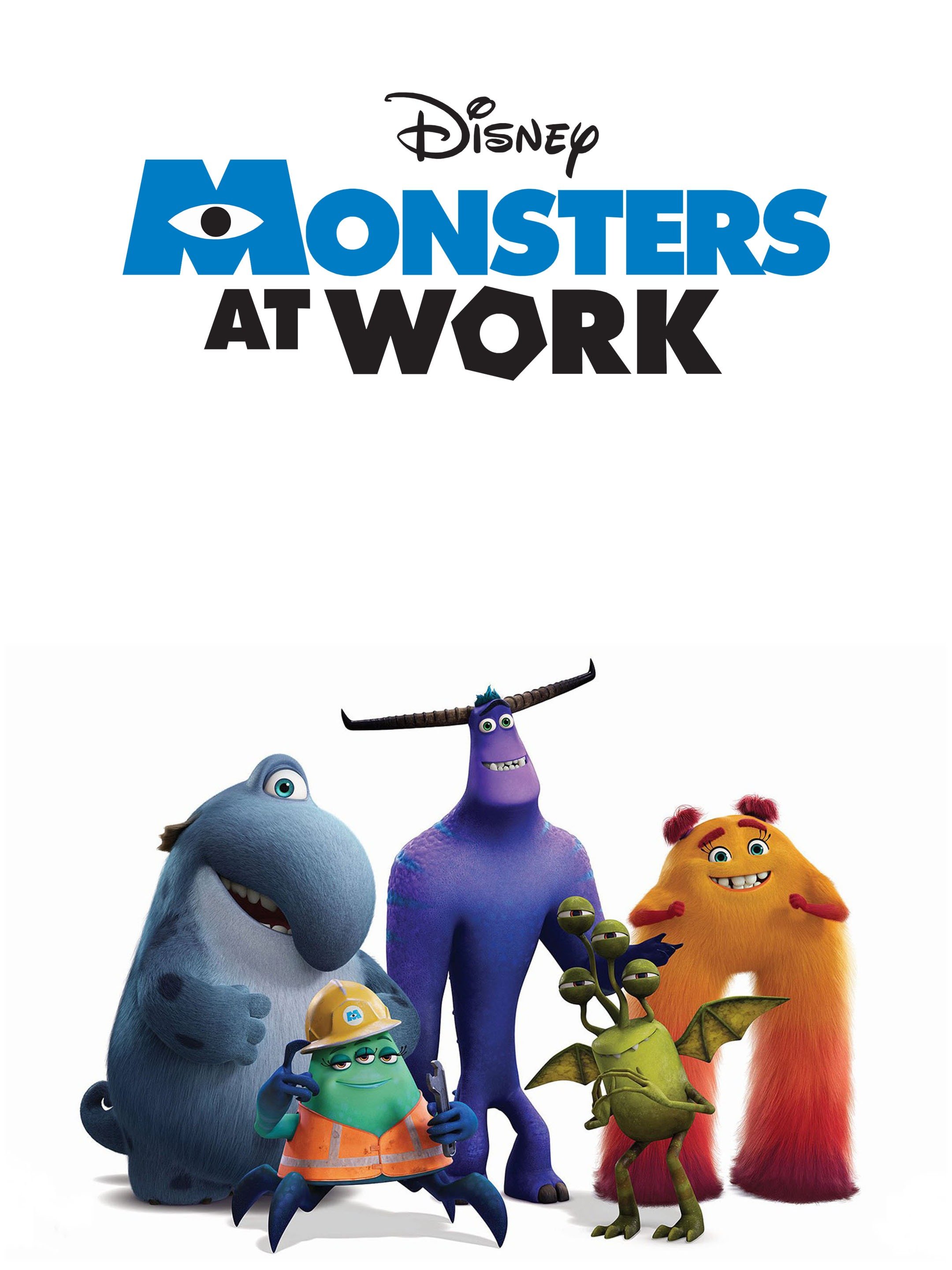
"Monsters at Work" Doesn't Work

As a kid, Monsters Inc. was one of my favorite Pixar films. I loved the unique design of each character, the bouncy Randy Newman score, and the colorful world of monsters. More than anything, I loved the interworkings of the Monster Inc. facility. The final confrontation with our heroes riding around on the different doors gave me chills every time. Watching the roller coaster-like mechanics and the hundreds of doors was absolutely mesmerizing. 

Every time I finished watching the film, I would go to the special features section on the DVD and watch all the behind-the-scenes footage that I could. I wanted to learn about what scenes were deleted and why. It's because of movies like this that got me passionate about storytelling from a very young age.

Monsters University was released in theaters when I was in High School. While some critics disliked it for its reliance on typical college movie tropes, comparing it to the likes of Animal House (1978) and Revenge of the Nerds (1984), it was exciting to me as well as other kids our age. I loved spending more time in the world of the original Monsters Inc. and seeing my favorite characters as younger people. Not to mention the moral of the story, which encourages its audience to think out of the box when your own natural abilities can't measure up to everyone's expectations. 

This movie made me want to go to college more than my own school did.

Jump to 2021 when Disney+ (our beloved harbinger of a new world capitalist order) announced a Monsters Inc. series. It was the first Disney+ show I really wanted to watch. I had zero interest in High School Musical: The Series, Diary of a Future President, or even WandaVision. I'm 22 years old and I'm not into the Marvel franchise, so I felt that none of the Disney+ shows really were targeted to me. 

Monsters at Work, however, showed promise. Watching the trailer for the first time, I was hooked. It was one of the few times where I felt that a franchise reboot was actually justified. I wanted to know what happened to the Monsters Inc. company as it made a rocky transformation to laugh power over scream power.

When I finally had time to watch it, I was impressed. 

Impressed by just how bad it was.

For a show that's all about monsters being funny, Monsters at Work rarely got a laugh out of me.

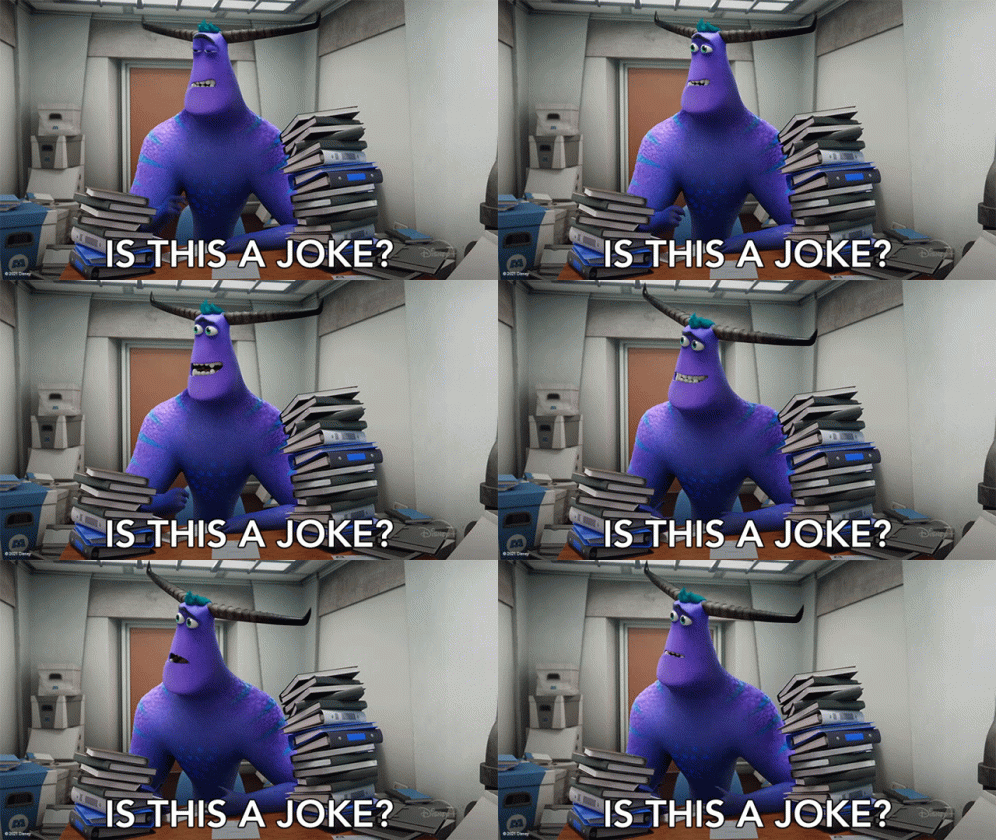
To summarize the plot, Tylor Tuskmon is a new graduate from Monsters University and has earned himself a spot as a scarer at Monsters Inc. Unfortunately he walks right into the ending of the first Monsters Inc. film and discovers that the company will be switching over to laugh power. Tylor, determined to work his way up as a jokester, takes a job for the Monsters Inc. facilities team, also known as MIFT. The MIFTers are the unseen heroes responsible for keeping the facility running. Tylor has to forget about everything he learned in college and start fresh at an entry-level job.


Honestly, episode one wasn't that bad. I really enjoyed it and thought it was a sign of good things to come. The character of Tylor is so relatable as he enters a world that his college education didn't prepare him for. What's even more interesting is that the true A plot of the episode follows Mike and Sulley dealing with becoming the new CEOs of Monsters Inc. Mike and Sulley are the characters I knew and grew up with, so I hoped to see more of them in the series. As the show went on, however, the old characters took the backseat as the new characters became more relevant. This would be fine if the new characters were funny and interesting. 

Surprise, surprise, they weren't.

When first introduced to the MIFTers, Tylor is annoyed by their overzealous personalities and their borderline-religious dedication to their blue collar job. It's funny in the first episode for the most part, because I'm completely on Tylor's side. 

The MIFT team is made up of four new monsters. Three of them absolutely suck.

Val is brightly-colored, extroverted, and full of energy. She's convinced that she and Tylor were best friends in college despite only ever speaking once. Her overexcitement becomes grating really fast. Tylor often rejects her advances, and the show tries to make him seem like the bad guy for it. Uh, no, she's way too clingy for comfort, and Tylor should not feel obligated to be her friend. Not only that, but Val has barely no opinions of her own and contributes to the echo chamber of stupidity that is MIFT.

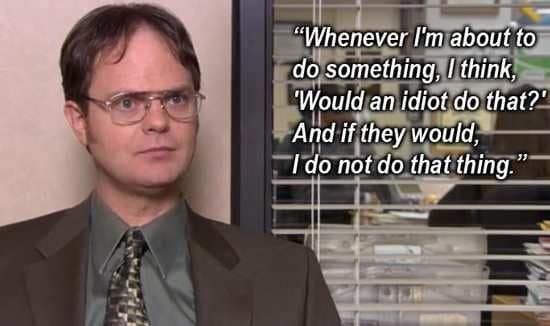
Duncan is the green and four-eyed monster who I like to call the "Dwight Shrute" of the series. Unlike Dwight, whose comedic timing and deadpan delivery make him a quotable and iconic character, Duncan is just lame. He is Tylor's self-proclaimed rival and continually antagonizes him. Duncan's actions never go farther than lying to sabotage Tylor's attempts to get out of MIFT. Duncan is a character who's all talk and no show, and even when he does talk, it's rarely funny. If anything, his ramblings about how he's ambitious and superior to everyone is boring.

Duncan is not clever enough to be Dwight, and that's saying something.

The least annoying MIFTer and best new character of the show is Cutter, a short and blue crab-like monster. She's the one who got the most laughs out of me because of how different she is. She's dedicated to MIFT, but unlike Val and Duncan who seem oblivious to how grueling the work is, Cutter enjoys the grueling work. She's the most monster-like of all of them, which makes her my new favorite. Unfortunately she doesn't get as much attention as the others do. Perhaps that's a good thing, because they didn't give her character a chance to overstay her warm welcome.

The worst character is their ringleader: Fritz. I hate Fritz with a passion. His design is hideous. He looks like a furry elephant seal with crusty yellow hair ringing his head. His personality is just as ugly. As the head supervisor of MIFT he sees himself as everyone's father figure, a source of one good joke in episode one, but it gets really old really fast. Fritz is overly dramatic about stuff that doesn't matter, like elaborate MIFT hazing ceremonies and the MIFT vending machine. His obsession with making Tylor love him and love MIFT is played for laughs, but comes off as disturbing. He's willfully oblivious to Tylor's true intentions of wanting to get away from MIFT as soon as possible. Fritz is supposed to be the leader of the group, but the character we really get is an immature and overgrown manchild with no sense of personal boundaries. For a monster who's not a scarer, he terrifies me.
Absolutely disgusting.

The show goes on as you might predict. Tylor tries to get ahead in the company, but he begins to accept his place in MIFT as he bonds with his coworkers. This isn't necessarily a bad plot, it's just very predicable. Overall, it just doesn't work because the other MIFTers are so unlikable. They continually step on Tylor's toes and get in the way of his dreams. Any moments of warmth between them is ruined by the fact that they're so oddly fixated with their jobs as the fix-it crew of Monsters Inc. I didn't buy the friendship between Tylor and the other MIFTers for one second. 

I'm a huge fan of the "group of weirdos making a family" trope, but this group of weirdos did not appeal to me in the slightest.

As Tylor's story goes on, we also get scenes of Mike and Sulley. The two of them face problems from bureaucrats who are displeased with the working conditions and energy output of the new Monsters Inc. It becomes hard to watch as Mike shows his complete ineptitude as a CEO and takes away what made me love his character in the first place: his dedication to his craft. Sulley barely has a role in the story at all, which is disappointing because I feel like as the most pivotal monster in the first film, he should have a lot more to say about his company moving forward. At the tenth and final episode of the show, he has a heart-to-heart with Tylor that feels devoid of any impact. We barely saw any of their interactions and know nothing about their supposed mentor-student relationship.

I think that's the bigger picture I'm getting at: Everything about Monsters at Work feels unearned. 

The unearned emotions stem from its noticeably unlikable characters. I like to call this the Patrick Star effect: if a character is so stupid for comedic effect that they end up causing more problems than fixing the, then that makes them unlikable. A lot of children's show writers think that a character who's stupid automatically makes them funny. What matters most is how their chemistry matches up with the other characters in the show. Sheen and Carl from Jimmy Neutron are funny because their stupidity is a grounding contrast to Jimmy's genius. Sheen and Carl humanize Jimmy and give him people to look out for. Patrick Star in the early seasons of Spongebob Squarepants is endearing because Spongebob and Patrick got along so well as friends. They are partners in their hijinks. In later seasons of Spongebob Squarepants, Patrick becomes somewhat of a villain as his unjustifiable bad decisions became the source of conflict for episodes.

The Patrick Star effect: if a character is so stupid for comedic effect that they end up causing more problems, then that makes them unlikable.

 Monsters at Work
suffers the same problem. The characters' incompatibility causes more problems in the show than it fixes. 

Earlier in this review, I made a comparison to The Office. The humor of The Office thrives on the characters having awkward interactions. It's funny because it's relatable, not because we enjoy seeing the characters suffer. When Michael Scott forces his employees to do something ridiculous, we laugh because we as the audience understands what it's like to have a superior screw around with us. It's funny because it's true. The magic of The Office is when the characters finally a point of understanding and has a few surprisingly touching moments.

No, Monsters at Work is not the cartoon version of The Office, as much as I wished it were.

Watching Monsters at Work, the character relationships were not relatable and did not make me laugh. It felt awkward in a way that was forced, not earned. 

Monsters at Work isn't funny because it's true. It's unfunny because they're trying to tell us it's funny.

Without giving away too much, the last episode of Monsters at Work redeems some of this, but not in any moments that will make you tear up or feel sad it's over. It's more likely you'll say, "They'd better not make a season two." That's what I definitely said. 

As much as I wanted a show that follows the world and characters of Monsters Inc., Monsters at Work left me feeling bad I ever watched it. There's so much potential for a monster world, but the most we ever got with this show were grating characters with no chemistry and a lot of bad puns. I don't know how to diagnose the problem other than this project was placed in the hands of people who had no passion or originality. For now, I'll continue to think fondly of the Monsters movies and try to forget this show ever existed.

Now Disney+, please, LEAVE THE CARS FRANCHISE ALONE. DON'T MAKE A SHOW TO RUIN MY IDOL LIGHTNING MCQUEEN.


Tuesday, September 7, 2021

Why We Love the Lion King (Even though it's Trash)


I love The Lion King

As a kid, it was my favorite Disney movie. I loved all the movies in the franchise, even the sequel and the Timon-centric midquel. I would reenact the plot with my stuffed animals. At nighttime, I would imagine more Lion King stories in my head until I fell asleep. With its epic story, brilliant animation, and catchy songs, this movie captured my imagination. It's baby's first Lord of the Rings.

Now, I have grown up. And I've started to think that the flawless diamond that was The Lion King is not the masterpiece I remember.

To simply summarize, the plot of The Lion King has some negative and dated implications about how society should function. 

Sit back, relax, and allow me to crack my knuckles as I sacrifice my sacred cow.

Part 1: The Cynical Analysis

When looked at with a cold eye, The Lion King promotes divine right monarchy and segregation between classes. 

Divine right monarchy is an obvious one. History has shown us countless times that kings and queens aren't as noble as they might want us to believe. I'll admit that I have a bias as a citizen of the United States, since I was raised in a culture that doesn't give a crap about royal blood (fun fact about that scene, it's Mufasa and Sarabi). The authority to rule should come from the consent of the governed, and that includes having the right to protest and dispose of unsatisfactory leaders.

Okay, I'll stop using other movies to illustrate my points.

What I mean to say is, royal families are problematic for multiple reasons. It prioritizes blood relation and birth order over qualifications on what truly makes a good leader.

Bringing it back to The Lion King, what about Simba tells us he should be king? Nothing, except the fact that he is Mufasa's son. Did Simba spend many seasons learning about diplomacy? Did Simba train hard to hone his battle skills? Simba's status as king is an heirloom, it's not something he truly earns.

I'll talk more about that later.

On the opposite side of the coin, what is it about Scar that tells us he's a bad king? I won't argue that he's a good one, as this scene with him and Zazu shows us that he is lazy, apathetic, and overall unconcerned about his people. Some fans like to give Scar the Wicked / Maleficent (2014) / Twisted treatment and imagine there is an untold story of him as a beneficial ruler. I'm not about to make Scar sympathetic, but isn't it interesting how the landscape itself has become barren and lifeless since his reign? It's as if the land itself knew that Scar was not the "rightful king." It has led some fans to theorize that Mufasa's own spirit has become the weather itself. 

I'm not saying that Scar did nothing wrong, but I am saying that his time as king is marked by a drought that he had no control over. He had no fair shot.

Well, I guess life isn't fair. Especially if you're not the first-born son of a king.

When some people argue that Scar is actually a good guy, they often point out that he's anti-segregationist. The hyenas in The Lion King were subject to controversy back in the day, with some critics claiming they are racist characteristics owing to their callous behavior and their voice actors. The lead hyena of the trio, Shenzi, is voiced by African American actress Whoopi Goldberg. The hyena Banzai is voiced by Mexican-American actor Cheech Marin. The third hyena, Ed, cannot speak like the others, which can be interpreted by some as a character with a mental disability. All three of these characters are not only villains, but they are treated as second-class citizens by the Mufasa and the other lions, exiled to uninhabitable lands. Full disclaimer, I'm not from any of those three groups, so I really don't have the authority to say what's right and what's wrong about the hyenas. I'm just pointing out what other people have said before.

In real life, hyenas are misunderstood scavengers, written off by other researchers and popular culture for being "ugly." Regardless if this was the filmmaker's intention or evidence of bias that slipped through the cracks, the hyenas are portrayed to be stupid villains who deserve to be separated from the rest of the animals beneath Pride Rock.

So...what moral is The Lion King really trying to tell us here? People with sacred bloodlines are naturally superior, and we should keep certain people out of our neighborhoods.

Okay, that's not really the moral of the story. 

The intended moral is executed just as poorly.

After Simba receives his pep-talk from his father in the clouds, Rafiki then delivers us what seems to be the movie's theme: "The past can hurt, but you can either run from it or learn from it."

The implication here is that Simba made a mistake and needs to own up to it. Simba must take responsibility for his actions. Only then can he truly cleanse the darkness in his past and rise to become the hero he was always meant to be.

Good lesson, right?

Wrong.

So what is the mistake that Simba is owning up to? 

There is none.

Scar manipulated Simba into believing Mufasa's death was his fault. When Simba grows up and finally confronts Scar, Scar then uses this lie to turn the lionesses against him. Nobody stands up for Simba. It's not until Scar reveals the truth that he killed Mufasa are the scales tipped in Simba's favor.

So the moral of the story is...Don't face up to your mistakes, unless you know the mistake wasn't actually your fault?

Or is it that when you admit to a mistake, don't expect anyone to stand beside you?

Good message for the kids, guys.

Granted, this could also be spun into a narrative of standing up to abuse, but that's more of a complex and internal struggle that can't really fit into a 90s Disney musical. 

This plot point could have been easily fixed with a few rewrites. When Simba admits to the lionesses that it was his fault Mufasa is dead, his mother Sarabi could come to his side and say that he was just a cub and he didn't mean it, and that his family still loves him. Or you can actually have Simba be responsible for Mufasa's death in a more direct way. You could also take the element of manipulation out and just turn it to a simple "stand up to the bad guy" story. 

One thing that always bothered me, ever since I was a little kid, is that it never is clearly stated how Simba is "responsible" for "killing Mufasa." I would rewrite it so that (with Scar's encouragement) Simba was trying to show off to his father how brave he was by hunting a wildebeest, his presence causes the stampede, and you know what happens from there. That way, Simba needs to forgive himself for what he's done, which is a moral that I think children need. Adolescence and adulthood is full of ugly moments and fuck-ups. I think a large problem that happens in our culture is when people punish themselves for their actions, instead of letting go and choose to live a happier life. Trust me, I'm definitely guilty of that one.  

So...that's it. As the credits roll, Simba has nothing to learn from his journey other than he did nothing wrong, and he was always born to win. This movie is secretly trash. 

I'll never watch it again and I'll never listen to the soundtrack.

Except...I'll watch this movie a thousand times and I will bleed my ears out to Elton John and Lebo M. 

I still love this movie. 

And part of me believes I don't really have a choice. There is something irresistible about The Lion King, and I think I know how to reverse engineer it to find out exactly what that is.

Part 2: The Science Behind our Love

To do this part correctly, I'll have to flex my English major muscles and dive into some literary theory. 

So, now that we know it's not a perfect film, why do I still love The Lion King?

Because it's a story that's deeply rooted in the human psyche. 

One of my favorite studies of literature is the study of comparing stories from all around the world. Scholars like Joseph Campbell and Carl Jung identified similarities between mythological stories from every culture across Earth, even cultures that never came into contact with one another. 

For example, the myth of a great flood. The bible has the story of Noah's Arc. The Incans have the story of Unu Pachakuti, a flood that devastated the world and left two to rebuild. The Koreans have the story of Namu Doryeon, the story of a fairy boy who survived a flood by floating on a tree that was his father. The list goes on. While the details are different, flood stories appear everywhere. Does this mean there was once a flood that covered the whole earth, and every group of human remembered it in story?

I like to think that it's because water is a cleansing symbol. When we read about floods in stories, we are really reading about the ending of an old era and the beginning of a new one. The sins and mistakes of the past are washed away, and the chosen survivors continue on wiser than their ancestors.

So, what is The Lion King really a story about?

The Lion King is the story of a young boy who looses his father and becomes a nobody. The boy truly becomes a man when he realizes that he is his father's reflection into the future. 

This story has been done before many times. (Not all of these examples are perfect fits but I do think they support the "I am my parent" motif.)

I believe this is rooted to the idea of "the Sky Father." We often hear of Mother Earth or Mother Nature, because archetypically mother figures nurture us and give us life. Often parallel to Mother Earth is the Sky Father, the god who is above his children as a guiding light. From the Christian capital-G God, to Greek mythology's Kronos, patriarch gods and father figures are often associated with the sky.

If the flood is a symbol of renewal, then what does the Sky Father symbolize?

Perhaps it is what early humans thought of their own fathers. Without paternity tests or monogamy to keep track of who everyone is related to, our ancestors knew their mothers but not their fathers. So, the father figure was a mere projection in the sky, an unobtainable image.

Jump cut to the 1950s United States suburbia. The staple was that every family was a unit with a father who went to work and a mother who stayed home and took care of the children. This is just one example, but it is a reflection of the Earth Mother and the Sky Father. The father leaves the house, the unseen supporter of his family. He is the role model for his sons to follow in his footsteps. (Let it be known I'm not speaking about this as if it's factual for every family, obviously everyone's relationship / lack of relationship to their father / father figure is unique. I'm just speaking more in terms of cultural archetypes often reflected in media.)

Jump cut to The Lion King

Simba tragically looses his father. He looses a part of himself. It isn't until he sees the spirit of his father - a projection in the sky - and realizes that his father lives on in him. 

The Lion King is the story about finding yourself by reaffirming who your parents are. It's about surrendering yourself to the status quo. Simba does not create great social change, he makes no great innovation. He follows in his father's footsteps and is rewarded for it.

This is weird, because as I said earlier, the moral of this movie is supposed to be "learn from the mistakes of the past." 

But the emotional climax - Mufasa's voice rumbling, "remember who you are," tells us to become our past.

It's a bit of a broken moral, yet, we love it anyway. We subconsciously love the story of becoming our own parents, because it is a story rooted in human culture. 

I'll never be a kid again, but I can still enjoy my own children's youth by watching them grow up.

I am the child, following my Sky Father, until I become the Sky Father, guiding my children.

It's the circle of life.

Conclusion: The Bittersweet Symphony

The Lion King is many things. The production behind it is enough to fill a novel. As for aftermath...we are still living in The Lion King aftermath. Don't even get me started on the Kimba controversy

In short, The Lion King has dazzling animation and an epic, sweeping score. In my opinion, a good enough coating to cover the ill-thought-out story. 

But the theme....oh boy, the theme. 

The symbol of a young person growing up and taking the place of their parent is universal. It's irresistible. The story of The Lion King is hard-wired in our brains in the same way that our brains are hard-wired to know that rotten fruit is inedible. For being the story about talking animals, The Lion King is a human story about the pains of growing up.

And as I grow up, and as I begin to see the perfect movies of my childhood for what they really are, I still can manage to turn the critic in my brain off and enjoy something without thinking too much about it.

Because no matter how much I tell myself it's bad, as soon as I hear that first vocal cry as the sun rises, I know the next eighty-eight minutes will make me happy.

But when I think about the 2019 movie...

THAT FUCKING PIECE OF TRASH MOVIE AWFUL CASHGRAB SOULLESS ARTLESS PIECE OF FUCKING SHIT THERE WAS NO LOVE NO PASSION NO CARE NO GODDAMN FUCKS GIVEN THEY JUST WANTED FUCKING MONEY THEY CREATED A SCENE-FOR-SCENE REMAKE OF A MOVIE THAT ALREADY EXISTSS AND PEOPLE STILL WENT TO GO SEE IT ANYWAYS CAN'T PEOPLE WAKE UP AND REALIZE DISNEY IS AN AWFUL COMPANY AND DOES NOT DESERVE OUR MONEY BECAUSE THEY GAVE UP ON ARTISTRY AND INNOVATION AND ARE NOW JUST REMAKING THE SAME MOVIES THAT WERE FINE BEFORE GAAAH I FUCKING HATE LION KING 2019 MORE THAN ANYTHING
Tuesday, June 15, 2021

Can a Story's Charm Redeem its Clichés? An analysis of “Mythica”


Prologue: A Fateful Decision 

One evening, my roommate and I decided the fate of movie night by flipping a coin. Heads, we watch Star Wars: The Phantom Menace. Tails, we watch some obscure fantasy movie that she suggested called Mythica: A Quest for Heroes

The coin landed heads-up, but we watched Mythica anyways because Disney+ wouldn't load. 

Perhaps it was better that way. 

Act I: Mystic Origins 

Mythica: A Quest for Heroes, is a film by Arrowstorm Entertainment, an independent company that specializes in sci-fi and fantasy films. Mythica: A Quest for Heroes was also partially funded through a Kickstarter campaign, and acts as part one to a series of five movies, released in a span of three years between 2013 and 2016. The Kickstarter campaign collected about $95,000, but I could not find an official budget. That’s how under-the-radar this production is.

So, how does the story stack up? 

A screencap from the movie (which you can watch on YouTube for free)
of our Four-Man-Band.


Act II: The Judgement War

Within the first ten minutes of watching Mythica: A Quest for Heroes, I joked about how someone shot a movie based on their DnD campaign. The plot does not shy away from typical fantasy tropes. In fact, it's built on them. 

Marek is a crippled slave girl who aspires to become a mage. After escaping her master, she goes to an adventurers' tavern to build a party and receive their first quest. She's plucky and optimistic, yet hides a dark secret. She's typical half-baked protagonist, but unlike some disappointments the Star Wars' Rey, Marek's inner darkness has real consequences and satisfying payoff in the later films. 

So, what other trope characters do we have? There's the drunken soldier Thane who takes on the role as human meat shield, as well as the team dad. There's the half-elf thief Dagen, who of course is also a silver-tongued womanizer. Finally, we have the modest yet no-nonsense priestess Teela who gives the team their first quest: rescuing her friends from their temple that was attacked by a band of ruthless orcs and a sinister human wizard. 

The wizard, working in service of a dark lord, is after a mysterious artifact from the temple. Yes, this is a Maguffin-driven story, are you surprised? "Find the thingy that the villains want so that we stop the thingy from being used for evil." It's as bland and uninspired of a story you can get. 

This problem isn’t isolated in the first film. If you’ve seen Star Wars and Lord of the Rings, you’ll get deja vu from these movies. Bad guy will manipulate good guy into joining their side to save their friends. Species-based racism exists but is never challenged. Characters die and return to life. Characters die and meet up with their mentor figure in a limbo before the final battle. Normally, I’d put a spoiler tag for all of this, but I’m pretty sure nothing in this list surprised you.

Marek: A quirky hero with a gift for magic and mysterious past,
 marked for greatness. She's even got her own scar. Last seen bagging
Harry Potter's corpse and stealing his glasses.

Act III: Revelations

The story is nothing ground-breaking. 

So why did I like it? 

It’s been said before, but there is no such thing as an original story. Every piece of art borrows from what came before it. Even still, Mythica’s reliance on established tropes is a bit distracting. If someone pitched this movie to me, I would reject it with a note saying, “Take some creative risk, dang it!” 

So why did I love Mythica: A Quest for Heroes, and watch all five films in the series?

What it lacks in originality, the other building blocks make up for in a secret ingredient: charm. 

The sets are full of detail, ranging from cozy cabins to monster-infested caves. It looks like they bought their props from a Ren fair, hand made by local craftsmen and designers. The practical effects, especially the makeup for the orcs, are very impressive for such a small production. 

Limitations can sometimes encourage creativity with what's available to you. 

The only “celebrity” actor is Kevin Sorbo, known for his role of the title character in Hercules: The Legendary Journeys, as well as other smaller-production Christian films like God’s Not Dead. He only appears in the first Mythica film for about five minutes, but that didn’t stop the production company from giving him top billing and transposing his face on promotional images. I thought it was a shame, because the other actors put a lot of effort in their performances. Personally, I like it when unknown actors are casted, because that way I don’t immediately associate their face with another character. The cast of Mythica owns every moment they are on stage. I especially love the performance of Nicola Posener as the priestess Teela, who wrestles with her duty to her goddess and her growing affection for the warrior Thane. While Thane’s character is the least developed of the four man band, actor Adam Johnson nails the portrayal of an aging soldier trying to find his place. No big-name celebrity is needed to make any character shine. 

Teela and Thane. Or as I call them, Theela. A couple that slays together
stays together <3

Honestly, Kevin Sorbo’s time on screen gave me the vibe that he’d rather be somewhere else. His character, Gojun Pye, is your typical aloof yet wise magic man. Sorbo’s portrayal, however, put more emphasis on aloof, making him easily the least compelling character.

HEY GUYS KEVIN SORBO'S IN THIS MOVIE 
IT'S GOTTA BE GOOD

With talented designers and actors, the only clear limitation of Mythica’s production is the computer-generated effects, but it's not something that will ruin your watching experience. If anything, it’s a gentle reminder that this isn't a million-dollar-budget money-making venture like The Hobbit trilogy or Snow White and the Huntsman. Unlike cash cow schemes orchestrated by cynical movie producers in Hollywood, Mythica is a passion project made with love in every stitch.

Epilogue: The Return Home 

In an interview with The Outpost, Jake Stormoen (who plays the role of the half-elf Dagen) describes his own lifelong admiration of classic fantasy, and how that has led to his attachment to Arrowstorm as a company. I think that captures what Mythica is all about. It's a film series made for fans of fantasy, by fans of fantasy. While the story takes no great risks and follows all-too-familiar tropes, you can still find enjoyment from how homey it feels. It sits comfortably in between a home video and a B-list action movie. If it sounds like the type of thing you would enjoy, then give it a shot. If not, then no sweat, you aren’t missing on anything monumental. 

As for me, I found myself following the films to the end. I knew exactly what kind of story I was getting out of Mythica: clichéd, but familiar. Sometimes, the familiar is exactly what you need. 


Saturday, June 5, 2021

Unleash the Archers: Apex and Abyss All Songs Ranked

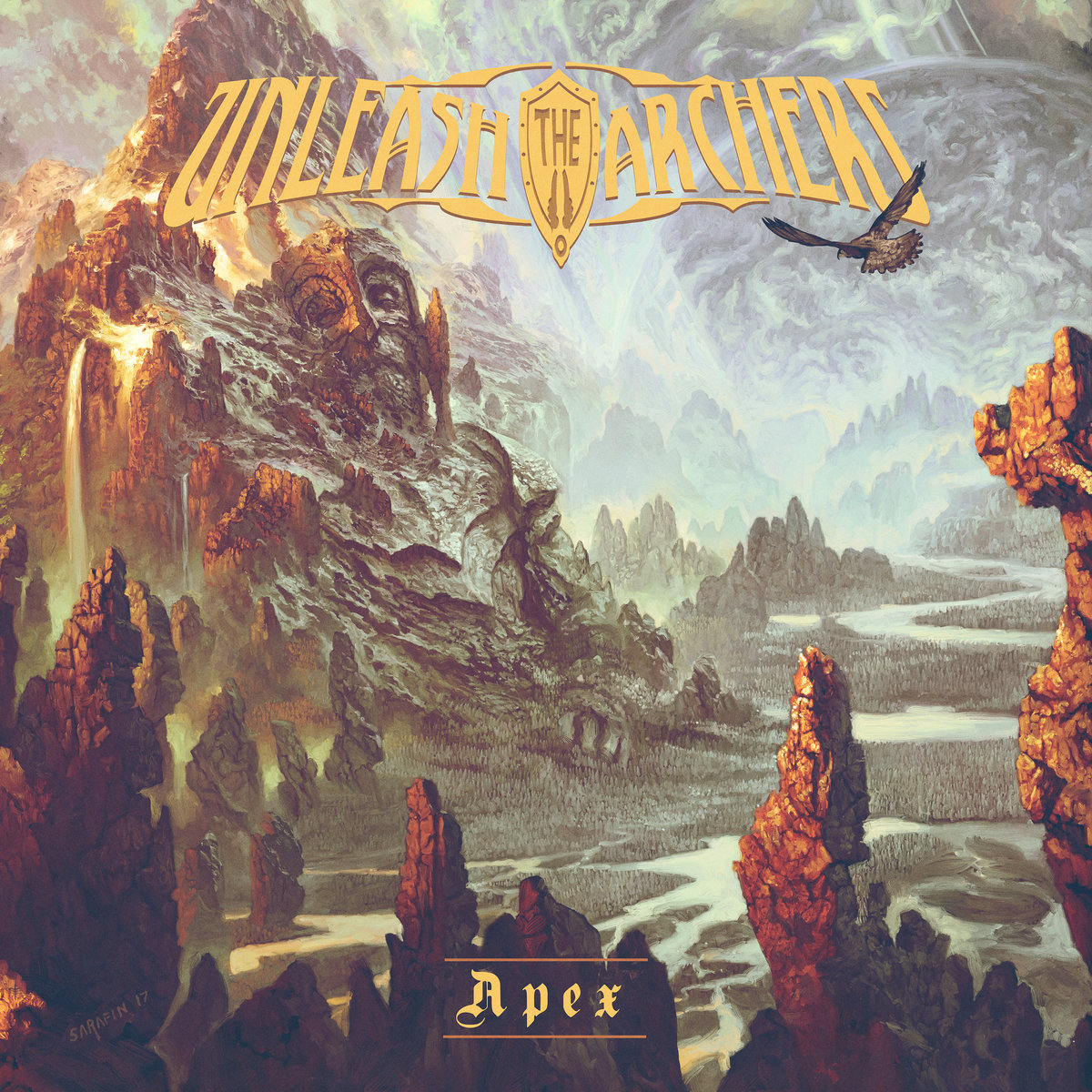
After listening to the albums Apex and Abyss by Canadian heavy metal band Unleash the Archers, it's hard to go back. Fast-paced, earnest, and driven by a gripping narrative, Apex and Abyss has been my obsession for the past five months. These two albums have set the standard of all other concept albums I listen to. It's my go-to playlist when taking the long drive to work. It's perfect listening for a workout, when you want to feel like a sword-wielding hero on a battlefield instead of an out-of-breath jogger like you actually are. I've spent enough hours listening to Apex and Abyss that I have a firm handle on what I believe are the best songs and which are the least best. Time to express my rabid fanaticism. 

Before the countdown starts, here is a brief recap of the story told through the lyrics of Apex and Abyss. For a more detailed and official summary, watch vocalist Britney Slayes' track by track explanation for both albums.


A cursed warrior called The Immortal is awakened from slumber by the villianous Matriarch to do her bidding. His quest is to find her four sons and deliver them home alive. Her sons include a corrupt politician, a manipulative false prophet, a general commanding The Matriarch's army, and a man who chose to live an honest life. Once the job is complete, the sons are sacrificed to create The Matriarch's elixir of life, giving her immortality and ensuring her reign will never end. After resting for many more years, The Immortal is awoken again by The Matriarch's grandson, who plans to end her reign with their combined strength. The Immortal is given a sense of purpose and hope as the chase begins. After an intense battle that decides the fate of the world, The Immortal emerges victorious and vows to make the world a better place.


20. Shadow Guide (Apex track 02)

Out of all songs in both albums, this is the one I least look forward to. While making this list, I ranked each song based on the criteria of (1) importance to the story and (2) overall musicality. The lyrics of this song describe the recently awakened Immortal looking for a sign from a falcon, his titular shadow guide, to point him to the direction of his new master. Overall, the appearance is not the most compelling way to kick off an adventure story. This is also probably the least catchy song on the list, it never gets stuck in my head. While far from being a bad song, it is the weakest in the catalogue, especially considering the masterpieces that are to come.  

19. Waking Dream (Abyss track 01)

I give "Waking Dream" credit for being unique: it's one of those songs that builds up, adding a new layer of sound with each of the repeating stanzas. The gradual growth gives me chills each time, and the increasing power behind Slayes's vocals makes it a cathartic song to lip-synch to. It does a perfect job conveying The Immortal's rest between the two halves of the story, as well as establishing the refrain in the final track of the album. While the song functions well, it still is low on the list for its short length and lyrical simplicity. 

18. The Coward's Way (Apex track 05)

This is the first song on The Immortal's journey to find The Matriarch's sons, as the initial verse of the song serves as pure exposition. It sets up the corrupt nature of the sons and captures the personality of the eldest as being - you guessed it - a coward. It serves its purpose for establishing the feeling of not only breaking into a quest, but a noble one, as The Immortal cleanses the land of the weak and wicked. While it is no doubt a kickass jam, the chorus doesn't quite deliver the same punch as some of the other songs above on this list.

17. Through Stars (Abyss track 03)

Similar to "Shadow Guide," "Through Stars" has a weaker role in the narrative. "Through Stars" appears as the third track on the second album, giving us a straight look into The Immortal's thoughts after he is awakened once again. Outright declarations of emotions are not the most powerful source of writing (perhaps you're familiar with the phrase "show don't tell"), but that's also kind of a requirement for songwriting, so I can't get too critical. Also, the guitar solo at the end is absolutely killer. I have the habit of singing The Offspring's "Gone Away" over it every time the song plays.

16. Apex (Apex track 10)

I shocked myself by placing "Apex" so low on this list. It's the end of the first album, the intense closer to act one, what could go wrong? Nothing went wrong, it just came off the heels from the song "Call Me Immortal," which also acts as winding down the narrative, so it comes off as a bit repetitive. Still, this song rocks. The Immortal's description of his pain and how he looks to his mountain as a place of healing is touching, serving as a great relief after such hard-fought battles. The musical rise and fall creates an apex of its own, showing off UtA's talent for writing songs with both power and meaning. 

15. The Matriarch (Apex track 03)

This song is just pure wicked fun. The lyrics are mostly exposition, told in the form of a third person fable about the title character's villainy. However, the creativity and poetry used to describe The Matriarch and her deeds is visceral and irresistible. Everyone loves a good villain song. 'Nuff said.

14. Faster Than Light (Abyss track 07)

When you're on a jog and need a reminder to run, this is the song you want to appear next on your playlist. I have a feeling that's exactly what UtA had in mind while writing this, because that's exactly what they did with the music video. 


Not only is it catchy as hell, the lyrics convey the inspiration to move forward and become more than what you thought you could be. As The Immortal and The Grandson outrun The Matriarch, you too can break past whatever is holding you back. Or just go for a run. 

13. Abyss (Abyss track 02)

After waking up from his sleep between albums, The Immortal greets us with this soaring epic. Despite what the title implies, "Abyss" sets the tone of the album as brighter and more hopeful, while the contemplative lyrics reflect The Immortal's internal story arc. It sets him on a quest of the physical, mental, and spiritual. Also, you can bet your ass every time Slayes declares, "I AM THE WEAPON OF EMPIRES PAST," I sing along. It makes me feel that much cooler. 


12. Ten Thousand Against One (Apex track 07)

This song is about the third son The Immortal must hunt down, or rather, his loyal soldiers who are slain to protect their general. The story in this song is almost a tragedy, as an army must fight one person they know they cannot kill. It's also an absolute beast to listen to, thundering with heavy percussions, making it the perfect song to listen to while marching off to an epic fantasy battle. Highly recommend listening to it before a DnD session. 

11. Awakening (Apex track 01)

Every time I play this album, I relish in the cinematic buildup and that initial YAAAAAAAAAAAAAAA! from Slayes. It's like a welcome home, in a way. The Immortal describes who he is and what he sees after waking up, with the foreboding feeling that this master will not be like the others who used him before. And, indeed, we get that feeling of dread hearing the voice of The Matriarch, performed by guitarist Grant Truesdall, which becomes a constant companion to The Immortal and his journey. It's the perfect blend of excitement and narrative to start a grand tale. 

10. Call Me Immortal (Apex track 09)

In my mind, this is the true grand finale to the first album Apex. This song is very narrative-driven, as The Immortal reflects on the role he has played in The Matriarch's rise to power, setting up his emotional character arc in Abyss. The sweeping instrumentals perfectly transposes The Immortal's tension into song, and the titular declaration of "Call me Immortal" not only builds hype, but closes the book on act one of this epic saga. 

9. Soulbound (Abyss track 06)

In the school of writing, there exists a rule known as "planting and payoff," also known by the name "Chekov's gun." If you want to use something late in the story, make sure it's mentioned earlier on. "Soulbound" is the Chekov's gun of Apex and Abyss, and the payoff is a wickedly good song. The Immortal spent half of act one hunting down the sons of The Matriarch, and this song in act two is about him being chased by their zombified forms. Thematically, it serves a purpose as it shows The Immortal's ill deeds coming back to haunt him. Musically, it's a rush that makes you feel the desperation and adrenaline of the chase.


8. The Wind That Shapes the Land (Abyss track 08)

This song is arguably the most important in both albums. It's the moment that The Immortal achieves apotheosis, summons his inner strength, and finally takes down his villainous master. The construction of this song is not my favorite, as it suffers a few starts-and-stops, but it makes up for it by featuring an intense buildup and experimental BPM switches. This song constructs a landscape of the rise and fall of battle through its music. It belongs in the ranks of Bohemian Rhapsody, Welcome to the Black Parade, and Jesus of Suburbia as self-contained orchestral epics.

7. Earth and Ashes (Apex track 08)

Within the story of Apex and Abyss, there also exists the story of one of The Matriarch's sons, a peaceful soul who renounced living his life to obtain power. When The Immortal arrives to bring him home, there is no battle to be fought, only an emotional toll as The Immortal realizes the unfairness of the situation. The son's assertion of "Earth and ashes / when I'm gone will still remain," reference his investment of time into his love and his family - instead of power like his brothers - show how he is in fact made richer than them all. This is proved to us when his son, referred to only as The Grandson, appears in Abyss to become The Immortal's most influential friend and guide. All of this to say, "Earth and Ashes" is an incredible song for the seeds it plants into the narrative. The duet between Slayes and guitarist Andrew Kingsley adds a new dimension of character as well, making the exchange that much more emotional.

6. Return to Me (Abyss track 05)

Out of all of the songs in these two albums, "Return to Me" is what I would describe as the most fun. The song is sung from the point of view of The Matriarch as she begins chasing after The Immortal and The Grandson. It's a total power trip as she sings about how her total control over the universe and the fate of every soul within. Her declaration of "the universe is mine" and the echoing unclean vocals by Truesdell feel so visceral. It hits like a battering ram on a rhinoceros driving a tank. It's one of those songs that I can feel vibrate within my own bones as I listen.

5. Cleanse the Bloodlines (Apex track 04)

If I had one tenth of The Matriarch's confidence, I'd have enough to take over the world for myself. This song takes place early on in Apex and is crucial to explaining the plot, as she gives her orders to The Immortal. The choral chanting and heavy percussions set the stage for what is to come - an epic adventure in which the fate of the known universe hangs in the balance of all-powerful forces. Sit down, Sauron, you've been replaced. While making this list, I did not consider music videos as part of the ranking. Still, I need to mention how much I appreciate the video for "Cleanse the Bloodlines." As a fiction writer who works tirelessly on my own passion projects, watching this video gives me so much inspiration and hope. Every time you see beautiful people on screen, you can tell they relish every second of it. I wish to be there one day.


4. Afterlife (Abyss track 10)

I'm a sucker for a good ending. That's why I will stand by Return of the Jedi as my favorite Star Wars movie - I don't care what the nerds say! "Afterlife" concludes the story of The Immortal in the most satisfying way by having him win his freedom and pass on the message of making your future bright, no matter what darkness lies in your past. "Afterlife" also brings us into a new dimension of music, as it both opens and closes with a whimsical flute solo that sounds like it came right out of the golden era of Disney. The return to the melody of "Waking Dream" also flexes just how much thought and care UtA puts into their songwriting. "Afterlife" is the perfect ending to a phenomenal duology of albums and entices you to listen to them again and again. 

3. Legacy (Abyss track 04)

As we reach my final top three, we continue the subplot of "Earth and Ashes" with "Legacy." This song occurs early on in Abyss, finding The Immortal after his ruminating in "Through Stars." Suddenly, there is an explosion of sound as a new character emerges - The Grandson of the Matriarch. He declares, "As I was wondering the world / trying so hard to find you." Slayes' delivery of this line shows off not only her impressive vocal range, but her acting as well. Us, as the listeners, feel "found" by this song. The introduction of The Grandson as a guiding light and sort of father-figure to The Immortal is a much needed warm welcome. It solidifies the tone of Abyss to be more hopeful and inspiring, which is something that we all need in life. 

2. False Walls (Apex track 06)

If you read the whole list up to now, you'll notice that I have a certain preference for songs: narrative-driven with musicality that reflects the story. That's why I rank "False Walls" as one of my favorites. Despite it being another "hunt down the bastard" song in the same vein as "The Coward's Way" and "Ten Thousand Against One," "False Walls" isn't just about The Immortal on a hunt. It's not a physical challenge - it's a challenge of his own mind. "False Walls" tells the story of the son that takes most after his mother, a religious overlord who uses deception and lies to control his followers. The lyrics start by placing us into a location (To the south there's a city / Ruled by a serpent tongue) giving us the vibes of an old western or samurai showdown. The words used to describe The Immortal's struggle over the false prophet are pure poetry (As though a fog has been lifted cries echo around us / And like his brother before him I feel no remorse). To top it all off, the music is absolutely, shamelessly, 100% badass. My favorite part is the guitar solo that tears through the bridge - it's slow, precise, but electrifying - painting a visual image of a swirling sandstorm, much like the false walls conjured by the false prophet. While this song may just describe another mission for The Immortal in act one, the execution is beyond phenomenal. It shows off what a seasoned and talented group of musicians is truly capable of. 

1. Carry the Flame

This might be a controversial opinion. "Carry the Flame" is not a structurally experimental song like "The Wind that Shapes the Land," nor is it lyrically complex like "False Walls." It's possible to say that this song is the most simplistic in its structure - verse / pre-chorus / chorus / verse / pre-chorus / chorus. Abyss was the first album I listened to by UtA. I didn't even know it was a concept album. Yet, when I heard "Carry the Flame" for the first time, I knew I was listening to something special. There was meaning behind the music and heart poured into every word. This song takes place between the final battle of "The Wind that Shapes the Land" and the grand finale of "Afterlife." What could possibly happen between those two plot points that demands a song? Oh, right, The Grandson dies! This song is a heartbreaking goodbye to the one friend The Immortal has ever known, with him desperately begging, "All I ask is one moment more." Kingsley sings the role of The Grandson, giving the audience a mental throwback to his role in "Earth and Ashes." He trusts the future in the hands of The Immortal and promises that he will always be with him. It's tragic and bittersweet. Each repetition of "My guiding light / Fire in the night" becomes more heartfelt than the last, and when Kingsley's voice finally slips away, Slayes comes in harder, embodying all of The Immortal's inner strength and will to continue living. The simplicity works in its favor. What else needs to be said?

Aaaaaanddddd...that's my list. It's 100% subjective so there is no need to take it too seriously. I'm speaking from my soul here. Regardless, I hope that I have properly conveyed how much I love these two albums and how much it means to me. 

For the sake of streamlining everything, here is my list ranked by individual album:


APEX

10. Shadow Guide

9. The Coward's Way

8. Apex

7. The Matriarch

6. Ten Thousand Against One

5. Awakening

4. Call Me Immortal

3. Earth and Ashes

2. Cleanse the Bloodlines

1. False Walls


ABYSS

10. Waking Dream

9. Through Stars

8. Faster than Light

7. Abyss

6. Soulbound

5. The Wind that Shapes the Land

4. Return to me

3. Afterlife

2. Legacy

1. Carry the Flame

Reject AI Slop // Embrace Books Written By Humans

“A guy walks into a doctor's office, and says 'Doctor, it hurts when I do this...' You know what the doctor says?” “...Don’t do ...